Astrology lovers and skeptical researchers alike ask whether a love chart can reliably indicate a partnership’s potential for harmony. By analysing planetary placements, house intersections, and synastry aspects, practitioners claim to flag compatibility strengths and red‑flags before couples even meet. This article examines the most common use cases, outlines criteria for choosing a trustworthy chart reading, and balances the touted benefits with the scientific cautions that temper expectations.
What a Love Chart Actually Measures
A love chart, also known as synastry, overlays two natal charts to reveal how each person’s planetary energies interact. The core elements include:
- Sun‑Moon connections – indicate emotional resonance and shared values.
- Venus‑Mars aspects – highlight attraction, sexual chemistry, and affection styles.
- Saturn‑Pluto overlays – point to long‑term stability or potential power struggles.
- House placements – show which life areas (e.g., career, family) are most affected by the partnership.
When multiple supportive aspects (trines, sextiles) appear, astrologers argue that the relationship has a higher likelihood of smooth navigation. Conversely, hard squares or oppositions may signal tension that requires conscious work.
Practical Scenarios Where Couples Turn to Love Charts
Researchers have identified three frequent contexts in which people consult synastry charts:
- Pre‑commitment checks – before moving in, getting engaged, or marrying.
- Conflict resolution – couples use chart insights to understand recurring arguments.
- Self‑discovery – individuals explore how their own planetary patterns attract certain types.
In each case, the chart serves as a conversation starter rather than a definitive verdict. For example, a pair with a challenging Mars‑Saturn aspect might decide to set clear boundaries around financial decisions, turning a potential friction point into a collaborative rule.
How to Choose a Credible Astrologer
Because the market ranges from free online calculators to seasoned consultants, applying selection criteria is essential. Look for astrologers who meet at least two of the following benchmarks:
- Professional affiliation with recognized bodies such as the International Society for Astrological Research (ISAR).
- Published work in peer‑reviewed journals or reputable astrology magazines.
- Clear methodology that explains which aspects are weighted and why.
- Client testimonials that mention concrete outcomes, not vague “life‑changing” claims.
Astrologers who rely solely on generic sun‑sign compatibility lists usually lack the nuanced analysis required for a thorough love chart.
Benefits That Hold Up Under Scrutiny
When used responsibly, love charts can offer tangible advantages:
- Increased self‑awareness – Knowing your Venus sign’s love language helps you articulate needs.
- Targeted communication strategies – Identifying a hard Mercury‑Saturn aspect encourages partners to practice patience in debates.
- Proactive conflict mitigation – Anticipating a potential power dynamic flagged by Pluto can lead to early boundary setting.
These outcomes align with broader relationship research that emphasizes the value of insight tools in fostering empathy and planning.
Key Cautions and the Limits of Prediction
Even the most detailed synastry map cannot account for free will, environmental pressures, or personal growth. The primary pitfalls include:
- Confirmation bias – Users may focus only on aspects that confirm existing beliefs.
- Overreliance on “hard” aspects – Hard squares can be worked through; ignoring that possibility creates a self‑fulfilling prophecy of doom.
- Lack of longitudinal studies – Academic literature on astrology’s predictive validity remains sparse, so conclusions are largely anecdotal.
Psychologists recommend treating the chart as a supplement to, not a replacement for, open dialogue and counseling when needed.
Integrating a Chart Into Ongoing Relationship Work
For couples ready to experiment, a step‑by‑step approach can maximize the chart’s usefulness:
- Obtain accurate birth data – exact time, date, and location for both partners.
- Generate the synastry report through a reputable astrologer or a vetted software platform.
- Schedule a joint review session to discuss findings without assigning blame.
- Translate insights into action items (e.g., “Schedule a monthly check‑in to discuss career goals because Saturn falls in the 10th house for both.”)
- Re‑evaluate after six months to see which predicted patterns have manifested and adjust strategies accordingly.
Bottom Line: A Tool, Not a Destiny
Astrology love charts can highlight emotional currents and potential friction points that would otherwise remain hidden, offering a structured vocabulary for couples to explore compatibility. However, their predictive power is conditional, hinging on how the information is interpreted and acted upon. When paired with honest communication and professional relationship guidance, a love chart may indeed contribute to a more harmonious partnership—but it should never be seen as a guarantee of love’s outcome.
Pick N Pay - Gauteng Current Catalogue 2026/12/01 - 2026/12/15

Pick n Pay - Gauteng Current catalogue 2026/12/01 - 2026/12/15
In-Store Catalogues | PnP
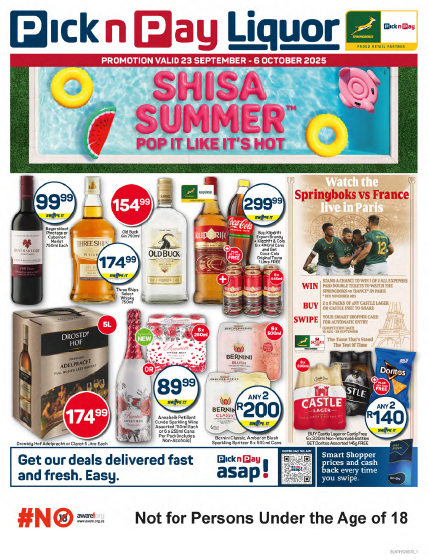
In-Store Catalogues | PnP
In-Store Catalogues | PnP
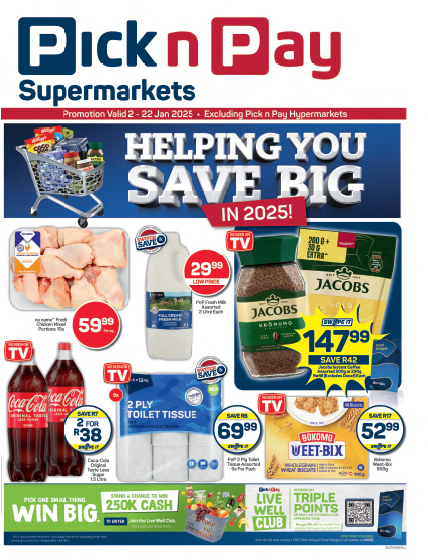
In-Store Catalogues | PnP
PICK N PAY Specials • Monday 24 Feb To Sunday 9 Mar 2025

PICK N PAY Specials • Monday 24 Feb to Sunday 9 Mar 2025
Pick N Pay QualiSave | In-store Catalogues | PnP

Pick n Pay QualiSave | In-store catalogues | PnP