Doppler radar has become the backbone of modern weather forecasting, delivering real‑time velocity and precipitation data that seasoned storm chasers and backyard meteorologists rely on to make informed decisions. Understanding the strengths, limitations, and operational quirks of these systems helps experienced hobbyists translate raw returns into actionable insights, whether planning a weekend thunderstorm pursuit or fine‑tuning a personal forecast model.
Scenario 1 – Interpreting Velocity Data in a Fast‑Moving Supercell
Imagine you’re tracking a supercell that’s racing across the High Plains at 45 mph. The radar’s velocity display will show distinct red‑blue shear bands indicating inbound and outbound winds. For a hobbyist, the key is to recognize the “gate” pattern—a narrow corridor of high shear that often precedes tornado development. By zooming into the lowest tilt angle (0.5°), you can isolate the low‑level mesocyclone, then compare it with the 0.9° and 1.5° layers to confirm vertical continuity. This layered approach reduces the risk of mistaking a transient gust front for a tornadic signature.
Example: Spotting a Hook Echo
- At 15 km range, a classic hook echo appears on the reflectivity base.
- Check the velocity pane: a tight couplet of opposite colors within the hook confirms rotation.
- Cross‑reference with surface observations—rising pressure falls and a sudden wind shift strengthen the tornado warning.
Scenario 2 – Assessing Rainfall Intensity for Outdoor Events
Suppose you’re organizing a weekend hiking trip in the Pacific Northwest. Doppler radar’s quantitative precipitation estimates (QPE) can predict localized heavy rain that might turn a trail into a mudslide. By selecting the “rainfall rate” product and setting the time accumulation to 30 minutes, you can see pockets of >0.2 in/hr intensity. The radar’s range resolution (≈250 m at 100 km) allows you to pinpoint which trailheads will stay dry versus those that will be inundated.
Example: Using Radar‑Based Nowcasts
- Open the radar’s “nowcast” overlay for the next hour.
- Identify cells moving at 20–30 mph toward your destination.
- Note the “hydrometeor classification” layer—if the cell is flagged as hail, expect rapid cooling and possible flash‑freeze on higher elevations.
Scenario 3 – Integrating Dual‑Polarization Data for Snowfall Estimates
In the Rockies, dual‑polarization (dual‑pol) upgrades have revolutionized snowfall forecasting. By examining the correlation coefficient (ρhv) and differential reflectivity (ZDR), hobbyists can differentiate wet snow from dry, powdery flakes—a distinction that directly impacts backcountry safety. A high ρhv (>0.95) paired with low ZDR (‑2 dB) typically signals fluffy, low‑density snow, whereas lower ρhv values indicate wet, heavy snowfall that can quickly become avalanche‑prone.
Practical Steps
- Switch to the dual‑pol product palette.
- Mark zones where ρhv drops below 0.90 and ZDR rises above 0 dB.
- Overlay the “snow accumulation” forecast to estimate total depth over the next 12 hours.
Recommendation – Building a Routine Radar‑Check Workflow
For the experienced hobbyist, consistency beats occasional deep dives. Establish a three‑point radar routine before each forecast cycle:
- Morning scan: Review the latest volume scan, note any lingering mesocyclones, and log their positions.
- Mid‑day verification: Compare radar trends with surface stations (e.g., METARs) to validate intensity estimates.
- Evening recap: Archive screenshots of key frames, annotate shear signatures, and update your personal database for future pattern recognition.
By embedding these checks into your weekly schedule, you’ll convert raw Doppler returns into reliable, decision‑ready intelligence, whether you’re chasing storms, planning outdoor activities, or simply sharpening your forecasting acumen.
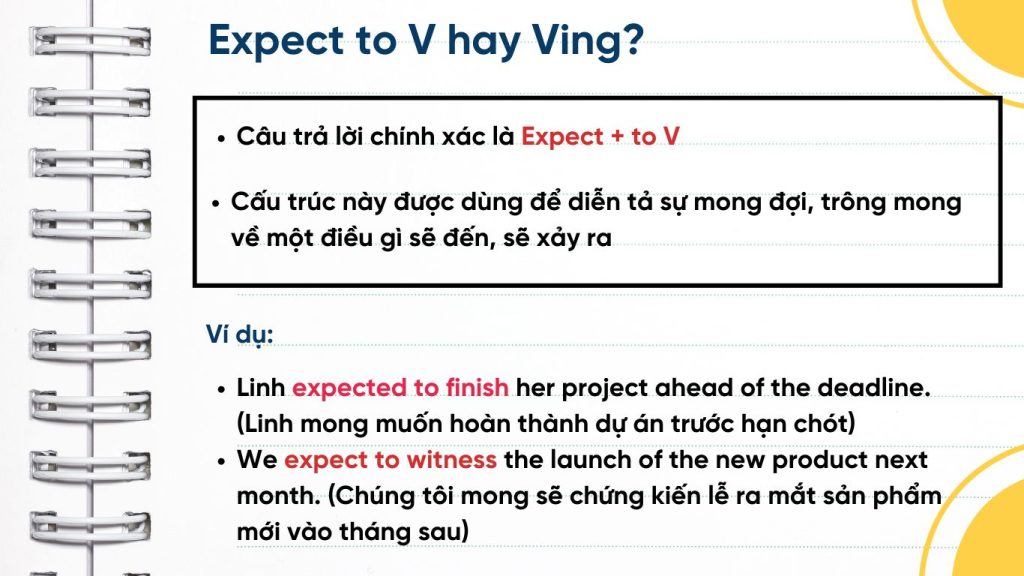
Expect To V Hay Ving? Cấu Trúc Và Cách Dùng Từ A - Z

What Is Expect? The Usage Of Expect In English

"Expect" Vs. "Hope" In English | LanGeek
Expect To V Hay Ving? Cách Dùng Và Cấu Trúc Expect Chi Tiết
Expect From Là Gì? Cách Sử Dụng Và Ví Dụ Cụm Từ Expect From Trong Tiếng Anh